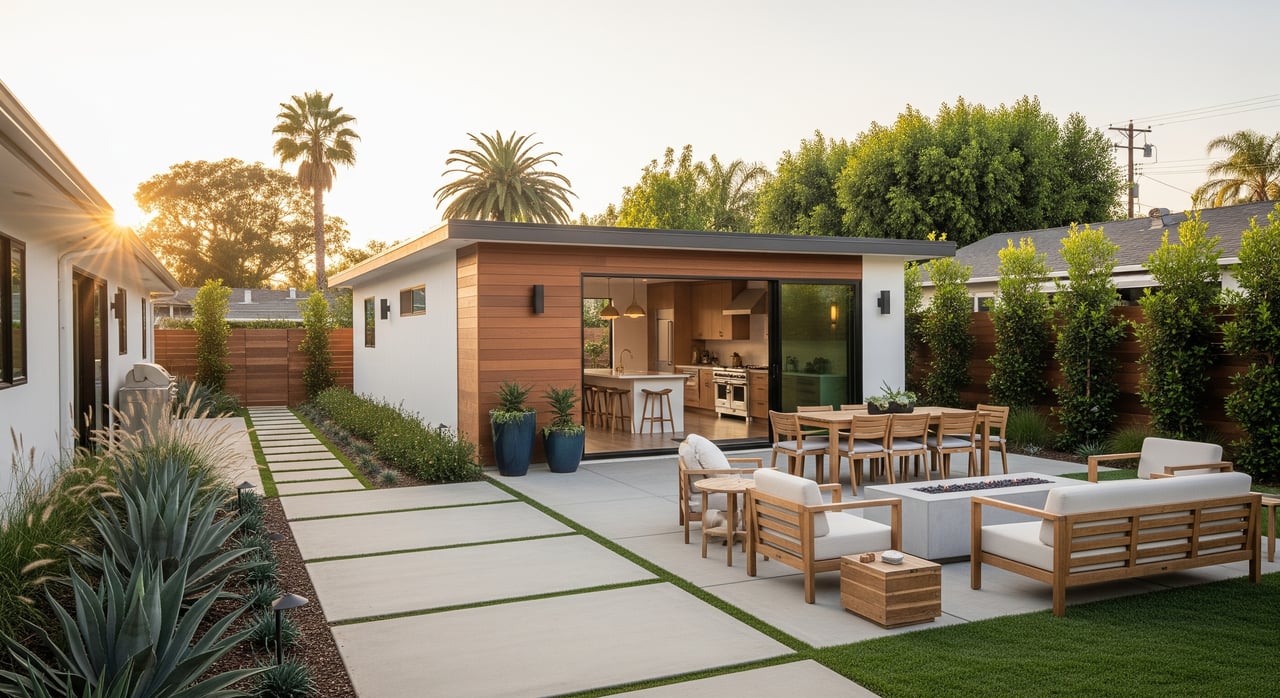
Thinking about adding a backyard home in Costa Mesa? An accessory dwelling unit can unlock rental income, create a private space for family, and boost your property’s value. With California’s streamlined ADU laws and Costa Mesa’s ministerial approvals, the path is clearer than you might think. In this guide you’ll learn the rules that matter, what it costs, how long it takes, and a simple way to model your return. Let’s dive in.
What counts as an ADU
An accessory dwelling unit is a secondary, self-contained residence on the same lot as a primary home. You can create one in several ways:
- Detached ADU: A new, separate backyard structure.
- Attached ADU: An addition connected to your main home.
- Conversion ADU: A garage, attic, or existing accessory structure converted to living space.
- Junior ADU (JADU): Up to 500 square feet carved from your existing home, often with shared facilities.
California state law requires ministerial review for most ADUs that meet objective standards. Local rules apply, but state law limits local restrictions and preempts them when they conflict. In Costa Mesa, you’ll work under the city’s ADU ordinance and objective design standards while benefiting from the state’s streamlined process.
Key rules you should know
Understanding a few big rules can keep your project on track from day one.
- Eligibility and approvals: Most ADUs that meet objective standards are approved ministerially, which means no subjective hearings. Expect plan review for zoning and building codes, then inspections during construction.
- Size and height: State rules commonly allow detached ADUs up to 1,200 square feet, though local ordinances may set lower maximums tied to lot size, unit type, or height. Check Costa Mesa’s municipal code for exact limits and whether second stories are allowed.
- Setbacks and lot coverage: Reduced setbacks may be available for smaller ADUs under state law. Lot coverage and open-space rules still apply, based on local code.
- Parking: State law relaxes ADU parking in many cases, especially near transit or for smaller units. Some situations may require parking or replacement of displaced spaces. Verify your property’s conditions before you finalize design.
- Fire and access: Orange County Fire Authority standards for fire access and safety apply. Design may need to address driveway width, hydrant distance, and sprinklers in some cases.
- Utilities and sitework: Budget for sewer, water, and electrical connections and potential panel upgrades. Backyard grading and drainage must comply with stormwater rules.
- Special areas: Properties in a historic district or the Coastal Zone can face additional review and constraints. Confirm your parcel status early.
Costa Mesa permitting steps and timeline
Most ADUs follow a predictable path. Getting organized upfront saves weeks.
- Pre-application: Speak with Costa Mesa Planning to confirm zoning, size, parking, and objective standards for your lot.
- Prepare plans: Create a site plan, floor plans, elevations, and energy compliance. Gather your title report and any technical reports your site requires.
- Submit application: Turn in your ADU and building permit package for ministerial review.
- Plan check: Planning verifies zoning compliance while Building reviews structural, electrical, plumbing, mechanical, energy, and accessibility items as applicable.
- Permits and inspections: Pull permits, build, and schedule inspections. Final approval leads to a certificate of occupancy.
Most ministerial ADU permits move faster than discretionary projects. Plan on roughly 4 to 16 or more weeks from submittal to permit issuance, depending on completeness and city workload. Fees include planning and plan-check costs, potential utility and school fees, and applicable fire review charges. Always confirm the current city fee schedule, since amounts can change.
Cost drivers and how to budget
Your total cost will depend on design choices and site conditions. A few factors matter most:
- ADU type: Conversion is generally the least expensive, then attached, with detached new builds typically highest.
- Size and finishes: More square footage and higher-end finishes add cost. Kitchens, bathrooms, windows, and appliances drive budgets.
- Site conditions: Slopes, retaining walls, tree work, and long utility runs increase cost. Conversions may require structural reinforcement.
- Permits and upgrades: Plan-check fees, impact or connection fees where applicable, and potential electrical or sewer upgrades.
- Safety and compliance: Fire sprinklers, energy standards, and accessibility-related features when triggered by code.
A simple way to budget is to add up hard costs, soft costs, permits and utility upgrades, then add a contingency for surprises. Get at least three bids from experienced local contractors and ask them to include timeline assumptions and a clear scope of work.
Financing options to consider
You have several ways to fund an ADU. Each comes with different rates, terms, and speed.
- Cash or savings: Fastest path with no debt service.
- HELOC or home equity loan: Common if you have sufficient equity; typically variable rates for HELOCs.
- Cash-out refinance: Replaces your mortgage and pulls cash, but watch closing costs and the rate on the new loan.
- Construction loan or ADU-specific loan: Provides funds in draws during construction; often interest-only during the build.
- FHA 203(k) or single-close construction-to-permanent options: Certain lenders offer programs that can incorporate ADU work.
- Personal loans or builder financing: Less common for larger projects but can fill smaller gaps.
Speak with a lender early to understand your borrowing capacity, the effect on monthly payments, and how draws will fund your contractor’s schedule.
How to model ROI the smart way
A clear framework helps you compare cost, rent, and value. Use these steps:
- Estimate total project cost: Include design, permits, utility upgrades, construction, and a contingency.
- Estimate market rent: Collect comparable long-term rentals for similar studios or one-bedrooms in Costa Mesa.
- Calculate Net Operating Income: Deduct vacancy, management, insurance, taxes on added value, owner-paid utilities, and maintenance from your gross rent.
- Evaluate value uplift: Divide NOI by a market cap rate for small rentals to estimate added property value.
- Check payback and cash flow: Compare NOI to total cost for simple payback. If financing, compute cash-on-cash return after debt service.
A hypothetical example
This example is for illustration only. Plug in your real numbers for your property.
- Total cost: $250,000 for a detached 600 to 800 square foot unit.
- Monthly rent: $2,500.
- Vacancy: 6 percent annually.
- Operating expenses: 30 percent of gross rent.
- Cap rate: 5 percent for small coastal Orange County rentals.
Results:
- Annual gross rent: $30,000.
- Effective gross after vacancy: $28,200.
- NOI after expenses: $19,740.
- Value uplift: $19,740 divided by 0.05 equals $394,800.
- Payback without financing: $250,000 divided by $19,740 is about 12.7 years.
What it means: If buyers value the ADU income at a 5 percent cap rate, the added value could exceed build cost, with a payback in the 10 to 15 year range. Actual results depend on true rents, final costs, taxes, and financing terms.
What to expect in the rental market
Costa Mesa benefits from steady regional demand. Proximity to Irvine job centers, Newport Beach, and coastal amenities supports interest in smaller, well-located units. Limited affordable options in coastal Orange County often make ADUs competitive in long-term rentals.
To estimate achievable rent, gather three to five comparable listings within one to two miles that match your size and amenities. Look at unit type, private entrance, parking, in-unit laundry, and whether utilities are included. Avoid relying on short-term rental rates since many cities restrict vacation rentals in residential zones.
Taxes, insurance, and other legal items
Building an ADU can change your tax and insurance picture. Here is what to review:
- Property taxes: New improvements can be assessed, which may increase your annual property tax bill. Contact the Orange County Assessor to understand how your project might be treated.
- Income taxes: Rental income is taxable. You can typically deduct expenses such as interest, depreciation, repairs, insurance, and property taxes under IRS rules. Consult a tax professional for specifics.
- Insurance: Notify your insurer. You may need landlord coverage when you rent the unit.
- Short-term rentals: Check Costa Mesa’s short-term rental rules before planning any vacation rental strategy. Operating without required approvals can lead to fines.
- HOA rules: If you are in an HOA, review your CC&Rs and architectural guidelines. State law limits outright bans but allows reasonable restrictions and review.
- Building and habitability: Your ADU must meet code requirements for egress, ceiling heights, ventilation, and safety. Fire sprinklers can be triggered in certain designs.
A quick ROI calculator you can use
Use this checklist to create a fast snapshot. Update the inputs as bids and rent comps firm up.
- Project cost: Design + permits + construction + utility upgrades + contingency = Total cost.
- Rent: Market rent per month x 12 = Annual gross rent.
- Vacancy: Annual gross rent x vacancy rate = Vacancy allowance.
- Operating expenses: Annual gross rent x expense rate = Operating expenses.
- NOI: Effective gross rent minus operating expenses = NOI.
- Value uplift: NOI divided by cap rate = Estimated added value.
- Payback: Total cost divided by NOI = Years to payback (no financing).
- Cash-on-cash: Annual cash flow after debt service divided by cash invested.
Your step-by-step plan
- Confirm eligibility: Schedule a quick pre-application check with Costa Mesa Planning to confirm standards for your lot.
- Choose your path: Decide on a conversion, attached, or detached ADU based on goals and budget.
- Line up financing: Talk to a lender about HELOCs, construction loans, or refinance options.
- Get three bids: Meet experienced ADU contractors, compare scopes, timelines, and allowances.
- Firm up design: Align layout with parking, fire access, and utility constraints.
- Submit and build: Move through plan check, permit issuance, and inspections. Track milestones against your draw schedule.
- Prepare to lease: Draft a lease, study fair housing guidelines, set screening criteria, and decide on management.
When you are ready to evaluate your property, run the numbers, or connect with vetted local vendors, the Annie Clougherty Team can guide you from plan to payoff.
FAQs
What is an ADU in Costa Mesa and how is it approved?
- An ADU is a secondary home on your lot reviewed through a ministerial process if it meets objective city and state standards.
How long does it take to get an ADU permit in Costa Mesa?
- Simple conversions can be approved in several weeks, while new detached units often take 4 to 16 or more weeks for plan check depending on completeness and city workload.
Do I need to provide parking for a Costa Mesa ADU?
- State rules relax parking in many cases, especially near transit, but some situations require spaces or replacement of removed parking, so confirm your site-specific requirements.
Are short-term rentals allowed for ADUs in Costa Mesa?
- Many California cities restrict short-term rentals; review Costa Mesa’s current ordinance before planning any vacation rental strategy.
Will building an ADU increase my property taxes in Orange County?
- New improvements can be assessed and may increase your tax bill; contact the Orange County Assessor to estimate potential impacts.
Can I build a second-story ADU in Costa Mesa?
- It can be possible depending on local height and setback rules; check the municipal code and objective standards for your property conditions.
What financing options work for ADUs in Costa Mesa?
- Owners commonly use HELOCs, cash-out refinances, construction loans, or specialized ADU loans, and a lender can help compare rates and terms.