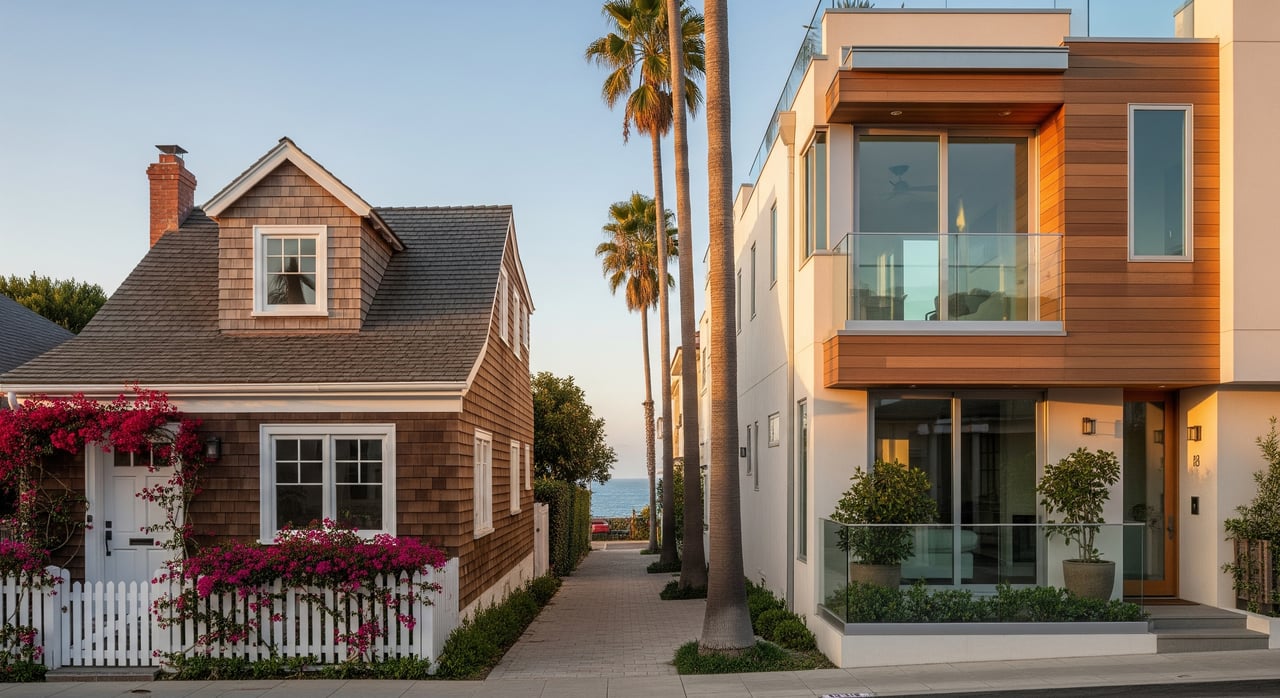
Should you keep a classic cottage or pursue a custom new build in Corona del Mar Village? It is a big decision with real tradeoffs. You want the right fit for your lifestyle, budget, and timeline, and you also want to protect future resale value. This guide breaks down what matters in CdM Village so you can move forward with confidence. Let’s dive in.
How the CdM market shapes your choice
Corona del Mar Village is a compact coastal neighborhood with small lots, walkable retail streets, and prized beach access. Land supply is tight, and prices reflect the exact block, ocean outlooks, and lot size more than age or style alone. That is why both preserved cottages and new builds can perform well when matched to the micro‑location.
Older cottages often command strong prices because of character and proximity to the village core. New builds tend to sell for higher absolute numbers, especially when design, size, and finishes align with buyer expectations. Market conditions change, so expect pricing to shift with inventory and interest rates.
What a cottage offers in CdM
Cottages typically range from one to three bedrooms on smaller lots. Many were built mid‑century or earlier. The appeal is real. You get authenticity, walkability, and a scale that feels connected to village life. You may also close faster with less upfront complexity than a ground‑up build.
Cottage maintenance is a different story. Coastal exposure can accelerate exterior wear, so plan for more frequent painting and metal treatment. Your inspection should focus on foundation movement, termite or pest activity, roof age, plumbing and electrical upgrades, sewer lateral condition, moisture issues, and seismic compatibility. Renovations can be a solution, but hidden conditions sometimes add cost.
Cottage due diligence checklist
- Get a full home inspection, pest report, and sewer lateral review.
- Verify plumbing and electrical upgrades if the home is older construction.
- Check for moisture intrusion and salt‑air corrosion on exterior elements.
- Confirm foundation stability and ask about seismic retrofits.
- Price out near‑term maintenance and any targeted renovations.
What a new build delivers
A new build can give you modern floor plans, efficient systems, and structural design tuned for seismic loads. You may gain more usable square footage by going vertical within local height limits. Builder warranties and lower immediate maintenance can reduce surprises in the first years.
Constraints are real in CdM Village. Lot coverage, height limits, setbacks, and floor‑area ratio apply. Staging construction on tight lots can be challenging, and access for equipment may affect schedule and cost. If your site is near bluffs or coastal edges, geotechnical studies and setbacks may apply. Tree removal, sewer, stormwater, and parking rules can also shape design.
Permits and timeline for a new build
- Pre‑application and design review, often with neighborhood feedback.
- Coastal development review for projects in the Coastal Zone and consistency with local coastal planning.
- Architectural and design review by the City or a review board.
- Building permits, utility permits, and inspections.
- Potential appeals or hearings that may add months to the schedule.
A custom entitlement process can take many months depending on complexity. After permits, construction for a custom home commonly runs many months as well. Local timelines vary, so plan conservatively and engage experienced local professionals.
New build reality check
- Expect detailed design work that aligns with height, massing, and material standards.
- Plan for neighbor and community input, especially around scale and views.
- Budget for construction logistics on a tight site and allow contingency.
- Line up an experienced general contractor with coastal project experience.
Site and zoning must‑knows in CdM
Small lots limit layout options and parking, and garage placement often requires careful planning. Public view concerns can lead to conditions on height or massing. If you are near a bluff or low‑lying area, geotechnical review and setbacks may apply. Confirm zoning, setbacks, and achievable floor‑area ratio before you make an offer.
Budget, financing, and appraisal
Your total cost to transform a cottage lot into a new build includes the purchase price, demolition, design and engineering, permit and impact fees, construction, landscaping, and contingency. Coastal Orange County construction often carries higher costs because of labor, logistics, and limited access on small sites. Always get estimates from local builders who know CdM conditions.
Financing paths vary by plan. A standard mortgage can work for an existing home purchase. For ground‑up construction, construction‑to‑permanent loans or cash are common. Renovation loans like FHA 203(k) or Fannie Mae HomeStyle can support significant updates. Appraisals can be challenging in mixed streets where cottages and modern homes sit side by side. A highly customized luxury build may appraise below cost if recent comparable sales are limited.
Taxes and insurance on the coast
New construction or a sale generally triggers a reassessment under California’s property tax rules. Expect a higher assessed value when you complete a rebuild or transfer ownership. For details on timing and calculations, consult the Orange County Assessor.
Insurance needs deserve early attention. If a parcel sits in a designated flood zone, a lender may require flood insurance. Coastal homes can see higher homeowners premiums due to exposure, and California carriers have adjusted underwriting in some coastal markets. Earthquake insurance is typically purchased separately in California. New builds can see lower immediate premiums because of modern systems, but replacement cost estimates for coastal homes can be high. Get quotes early in your planning to avoid surprises.
Lifestyle and resale factors
Cottage buyers often value authenticity, walkability, and a lower‑maintenance footprint. Downsizers and second‑home buyers are common in this pool. New‑build buyers seek turnkey living with larger great rooms, indoor‑outdoor flow, and luxury finishes. In both cases, the micro‑location drives outcomes. A small, intact cottage on a prime village block may outperform a larger home on a less active street, and the reverse can also be true.
Neighborhood sentiment matters. Some residents prefer preservation and may raise concerns about scale or views when larger homes replace cottages. Public input can shape design choices and timing. If short‑term rental use is part of your plan, verify current rules with the City of Newport Beach before you buy.
Quick decision framework
Choose to keep or buy a cottage if:
- You want character, walkability, and a simpler, faster path to move‑in.
- You value lower total project complexity and shorter timelines.
- Your lot size or zoning limits meaningful expansion.
- You are comfortable with targeted renovations and ongoing maintenance.
Choose to pursue a new build if:
- You want modern space planning, energy efficiency, and taller ceilings.
- Your lot and zoning support a design that fits neighborhood standards.
- You are prepared for a multi‑phase process that can take many months.
- You have financing lined up and a builder with CdM experience.
Your next steps in CdM
- Clarify your goal. Decide if this is a full‑time residence, a second home, or a long‑term hold.
- Run the numbers. Compare current cottage sales and new‑build sales on similar streets and set a total project budget with contingency.
- Inspect early. Order full inspections and obtain a preliminary feasibility review with an architect or builder.
- Verify zoning. Confirm setbacks, height limits, lot coverage, and any coastal or geotechnical requirements.
- Map the permit path. Understand design review, coastal requirements, and potential hearing timelines.
- Secure financing. Get pre‑approved for the right loan type, including construction if needed.
- Price insurance. Request homeowners, flood if applicable, and earthquake quotes based on your plan.
- Set expectations on resale. Align design or renovation with buyer demand for your micro‑location.
When you want local guidance, introductions to vetted architects and builders, and a data‑driven view of CdM micro‑markets, reach out to the Annie Clougherty Team. Our team combines neighborhood insight with precise execution so you can buy, build, or sell with confidence.
FAQs
CdM Village feasibility of teardown and rebuild
- Often feasible, but it depends on lot size, zoning, coastal requirements, and neighborhood constraints. Expect an entitlement process that can be lengthy.
CdM Village value: cottage vs new build
- Both can hold value. Cottages draw strength from location and character, while new builds can achieve higher absolute prices when design and size match demand.
CdM Village timeline for a custom new build
- Entitlement and design review can take many months, and construction commonly takes many months after permits. Plan conservatively and confirm with local pros.
CdM Village property taxes after a rebuild
- New construction or a sale generally triggers reassessment under Prop 13 rules. Consult the Orange County Assessor for timing and calculation details.
CdM Village coastal risk and erosion concerns
- Coastal erosion and sea‑level rise are relevant near bluffs and low‑lying areas. Use flood and coastal risk resources and obtain geotechnical input for site‑specific guidance.